


September 17, 2025
How the PSLE Shapes Education and Beyond for Singaporean Students
Dear Parents,
Many children start Primary Science with excitement — they love experiments, they ask endless "why" questions, and they genuinely enjoy discovering how the world works. Yet by Primary 5 or 6, that same curiosity often fades, replaced by frustration with dense textbooks, confusing diagrams, and questions they can't seem to answer correctly.
The issue is rarely about intelligence. It's about how Science is taught.
In many school classrooms, Science is presented as a set of facts to memorise — definitions to recall, diagrams to label, processes to list. But the Singapore Primary Science syllabus is actually designed to go much deeper than that. It expects students to observe, compare, analyse, predict, and explain — skills that require genuine understanding, not just memory.
This is where our Primary Science Mastery Programme makes a real difference.
Our Teaching Strategy: The 3-Pronged Approach
At Edufront, we've developed a structured 3-pronged strategy that addresses the three core pillars of Science mastery:
1. Science Concepts
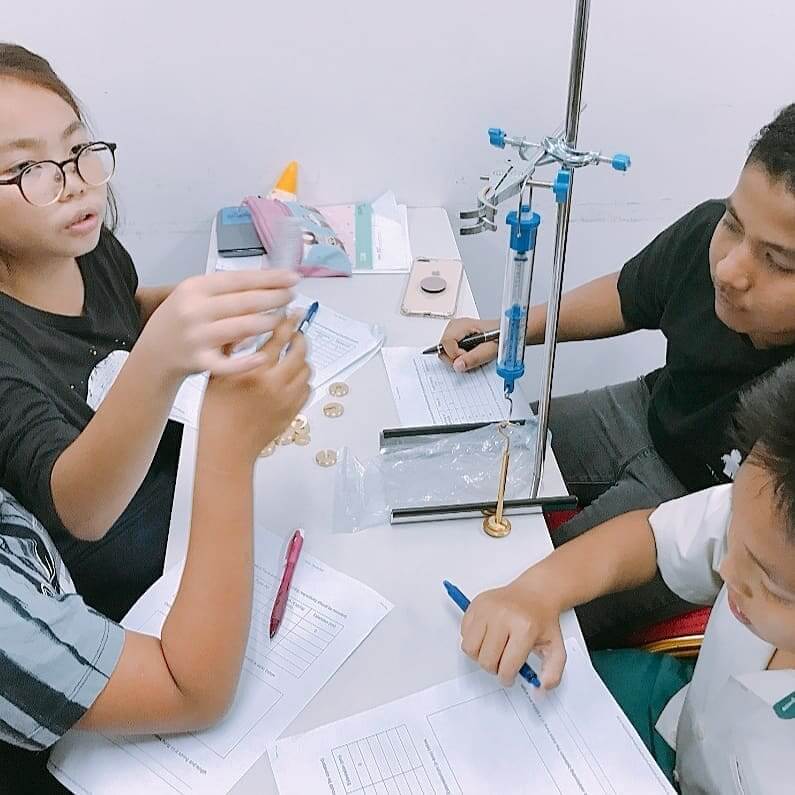
We build your child's knowledge and understanding of key science concepts through engaging, hands-on learning experiences. Rather than simply reading about photosynthesis or heat transfer, our students explore these concepts through guided experiments and real-world observations. This approach helps them form lasting mental models of how scientific principles work.
Our lessons cover the five major themes of the MOE Primary Science syllabus:
- Diversity: Understanding the variety of living organisms and materials in the world around us
- Cycles: Exploring life cycles, the water cycle, and cycles in matter
- Systems: Learning how cells, organs, plants, and ecosystems function as interconnected parts
- Interactions: Understanding forces, heat, light, and magnetism — how they affect objects and the environment
- Energy: Exploring forms of energy — light, heat, sound, electricity — and how energy is converted and conserved
2. Answering Techniques
Understanding a concept is only half the challenge. Your child also needs to express that understanding clearly in written answers. We teach structured answering techniques that help students: - Identify keywords in questions to understand exactly what is being asked - Construct precise, well-organised answers that address all parts of the question - Use scientific vocabulary accurately and appropriately - Avoid common answer pitfalls like vague or incomplete responses
3. Process Skills
The MOE syllabus places significant emphasis on scientific process skills, which are often undertaught in school. These skills form the foundation of scientific thinking:
- Observing: Noticing specific details and patterns
- Comparing: Identifying similarities and differences between objects, organisms, or phenomena
- Classifying: Grouping items based on shared characteristics
- Analysing: Interpreting data from tables, graphs, and experimental results
- Predicting: Making evidence-based predictions about outcomes
- Inferring: Drawing logical conclusions from observations
- Communicating: Presenting scientific findings clearly in words, diagrams, or tables
We integrate these process skills into every lesson, ensuring your child develops them naturally as they learn new concepts.
What Your Child Will Learn at Each Level
Primary 3: - Diversity of living and non-living things - Diversity of materials - Life cycles of plants and animals - Introduction to magnets
Primary 4: - The human body as a system (digestive and circulatory systems) - Plants and their parts - Matter and its three states - Light and shadows - Heat and temperature
Primary 5: - Plant and human reproductive systems - The water cycle - Cells — the basic units of life - Electrical circuits and magnetism - Introduction to the concept of energy
Primary 6: - Interactions within the environment (food chains, food webs, adaptation) - Interactions of forces (friction, gravitational force) - Energy conversions and conservation - Man's impact on the environment
The Edufront Difference for Primary Science
What makes our science tuition centre stand out:
- Hands-on experiments included in lessons to make abstract concepts tangible and memorable
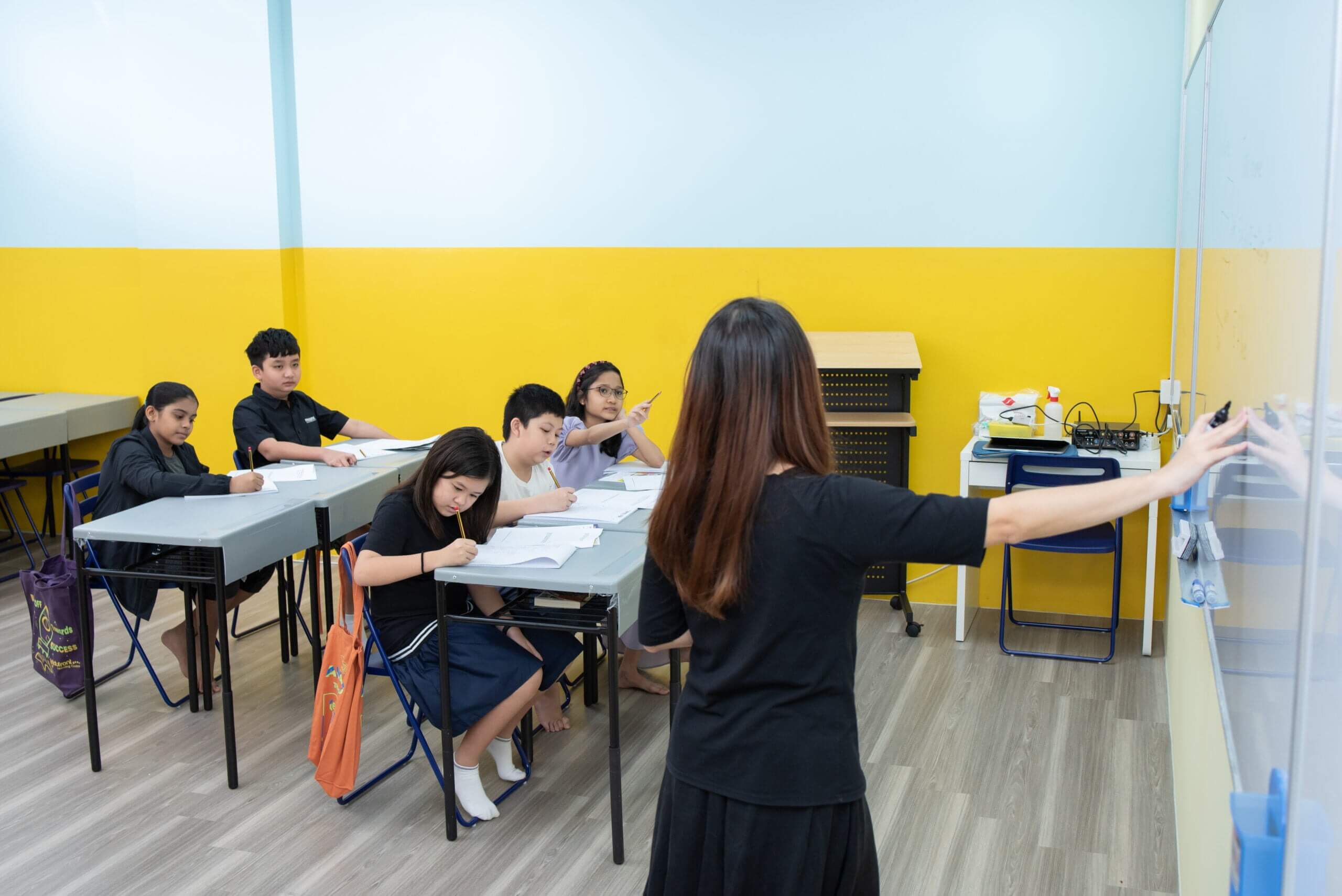
- Small class sizes so every child can participate, ask questions, and receive individual guidance
- In-house worksheets and notes developed by our curriculum team, aligned with the latest MOE syllabus
- Diagnostic assessments to identify each child's conceptual gaps from the start
- Learning Management System (LMS) access for parents to track progress and review materials
- Regular revision sessions to reinforce topics and build long-term retention
Our Science tutors are experienced educators who bring genuine enthusiasm for the subject. They create a classroom atmosphere where curiosity is encouraged, questions are welcomed, and mistakes become learning opportunities.
I invite you to explore our Primary Science programme and see how we can help your child rediscover the wonder of Science.