September 17, 2025
How the PSLE Shapes Education and Beyond for Singaporean Students
LMS Login
Get your spot for 2027 weekly programme!

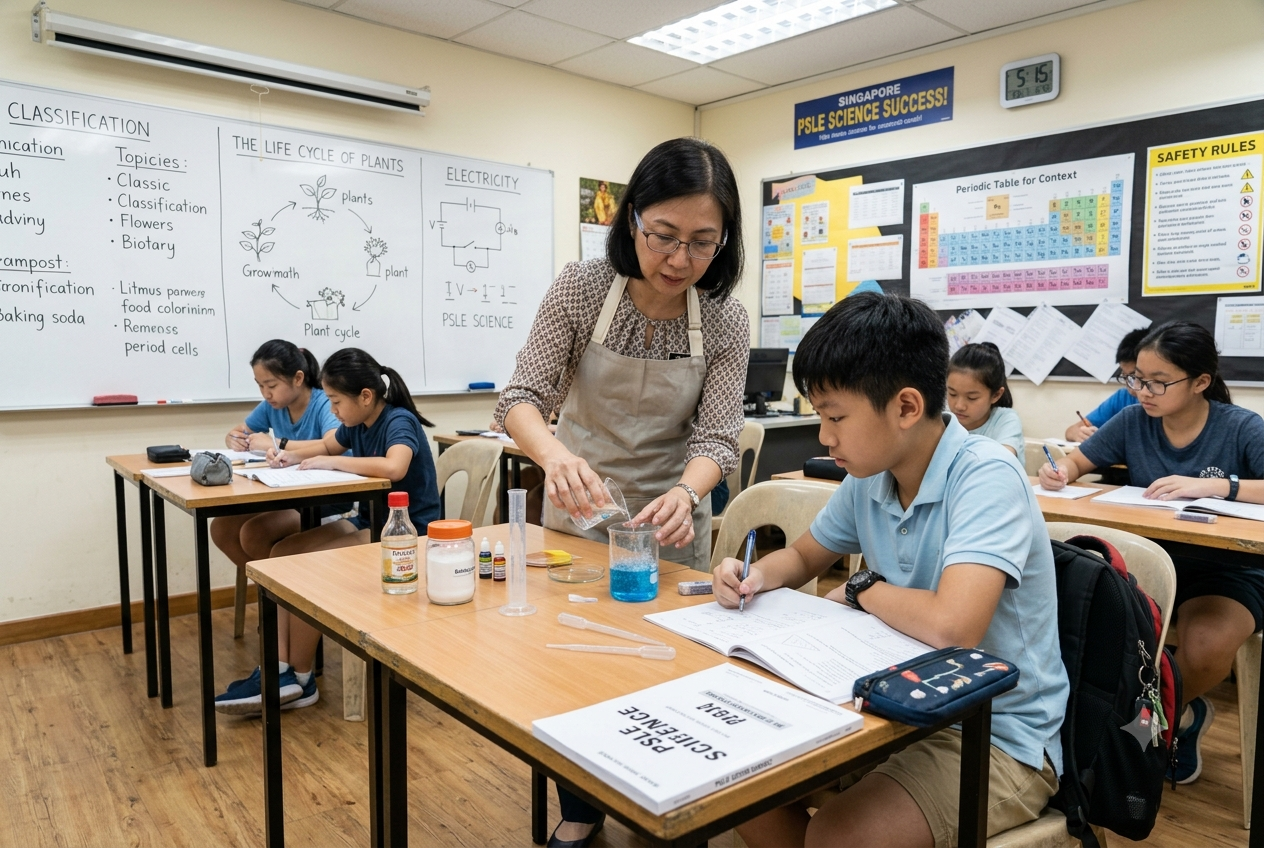
Master PSLE Science with Edufront. Expert tutors, proven answering techniques & concept application strategies. Our students achieve 2-3 grade improvements.
Helping Students Achieve PSLE Science Success Year After Year
With our targeted exam preparation and proven teaching strategies, Edufront students consistently achieve significant PSLE Science grade improvements.
%
+
Why Students Who Know the Science Concepts Still Lose Marks in the PSLE
Dear Parents,
One of the most frustrating experiences for parents is watching their child study Science diligently, understand the concepts at home, yet still underperform in exams. If this sounds familiar, you're far from alone.
The PSLE Science exam is specifically designed to test more than factual recall. It asks students to apply concepts to unfamiliar scenarios, analyse experimental data, and construct precise written answers. A student who "knows" the answer but cannot express it in the format the examiner expects will still lose marks — often many marks.
This is the gap our PSLE Science Mastery Programme is built to close.
The PSLE Science paper consists of two sections:
Section A — Multiple Choice Questions (MCQ):
- 30 MCQ questions
- Tests breadth of knowledge across all topics
- Includes straightforward recall questions and more challenging application questions
- Common traps include distractor options that seem correct but contain subtle errors
Section B — Open-Ended Questions (OE):
- 10-12 open-ended questions of varying difficulty
- Tests the ability to explain, compare, predict, and analyse
- Requires precise, well-structured written answers
- This is where most students gain or lose the marks that determine their final grade
Section B is the critical differentiator. Students who can articulate their scientific reasoning clearly and completely earn significantly higher marks than those who give vague or incomplete answers — even if both students understand the concepts equally well.
At Edufront, our PSLE Science tuition goes beyond concept revision. We train students to perform in the exam:
The single most impactful skill for PSLE Science OE questions is structured answering. We teach students to:
- Claim: State the answer or conclusion clearly
- Evidence: Reference the specific observation, data, or fact from the question that supports the claim
- Reasoning: Explain the scientific concept that connects the evidence to the claim
This framework ensures every answer is complete, logical, and addresses what the question is actually asking — preventing the most common reason students lose marks: incomplete answers.
PSLE Science rarely tests concepts in the same way they were taught in the textbook. We train students to:
- Recognise which concept is being tested, even when the question uses an unfamiliar context
- Apply concepts to real-world scenarios and novel experiments
- Connect concepts across topics (e.g., linking energy, heat, and the water cycle in a single question)
- Handle "explain" vs "describe" vs "compare" questions differently — each requires a distinct answer structure
For Section A, we teach:
- Systematic elimination of incorrect options based on scientific reasoning
- Identifying common PSLE Science distractor patterns
- Managing time effectively across 28 questions (recommended: 45 minutes max for Section A)
- Flagging uncertain questions for review rather than spending too long on any single question
Based on our analysis of past PSLE Science papers, certain topics appear more frequently and carry higher marks:
Most commonly tested concepts:
- Photosynthesis and respiration (including their relationship)
- The human circulatory and digestive systems - Electrical circuits (open, closed, series, parallel)
- Heat conduction, convection, and radiation
- Food chains, food webs, and adaptation
- The water cycle and its connection to energy
- Forces and their effects on objects
Most challenging question types:
- Experimental design questions ("Plan an experiment to test...")
- Data interpretation from tables and charts
- Questions requiring comparison between two processes or systems - "What would happen if..." prediction questions
We allocate more time and practice to these high-impact areas, ensuring students are thoroughly prepared for what they will most likely encounter.
Our approach has helped many P6 students make significant improvements in their PSLE Science results, with numerous students achieving AL1–AL3 after starting with weaker grades.
Warm regards,
Mr. Yang Iskandar
Principal, Edufront Learning Centre
Award-Winning Tuition, Backed by Proven Results
With over a decade of proven outcomes, Edufront is trusted by parents across Singapore for delivering real academic breakthroughs — not just worksheets or homework help.
Our difference lies in how we teach, who teaches, and the system we’ve built to support every learner.
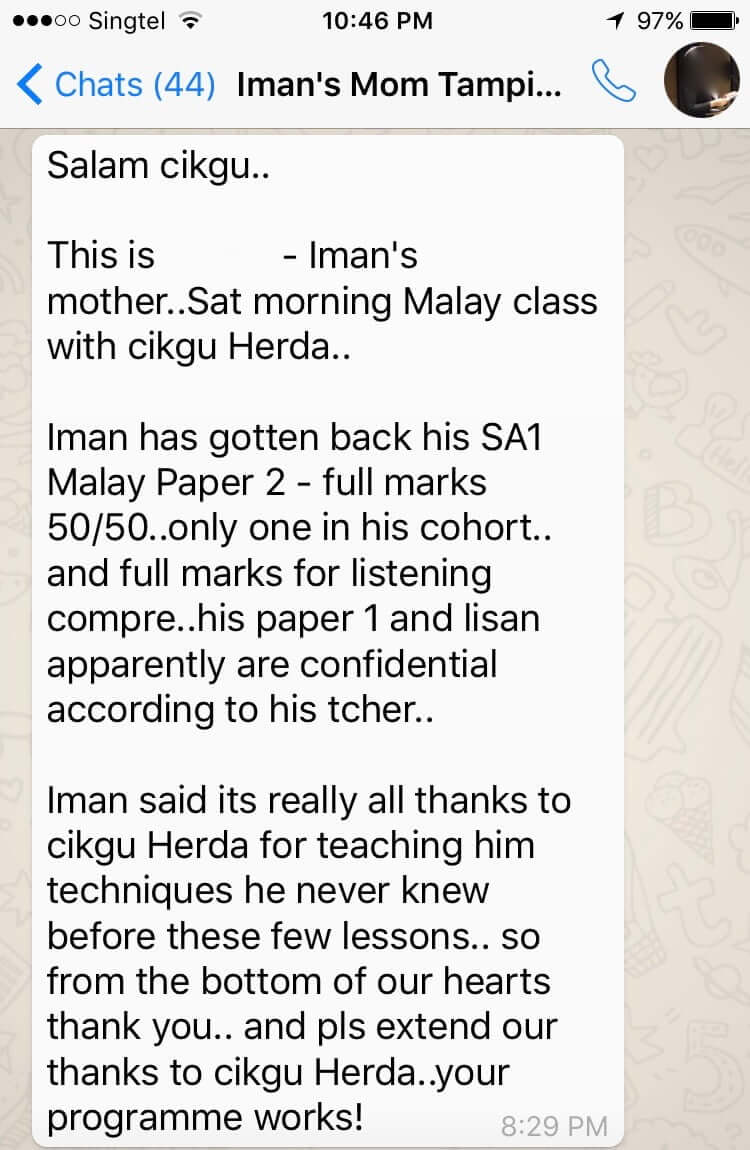
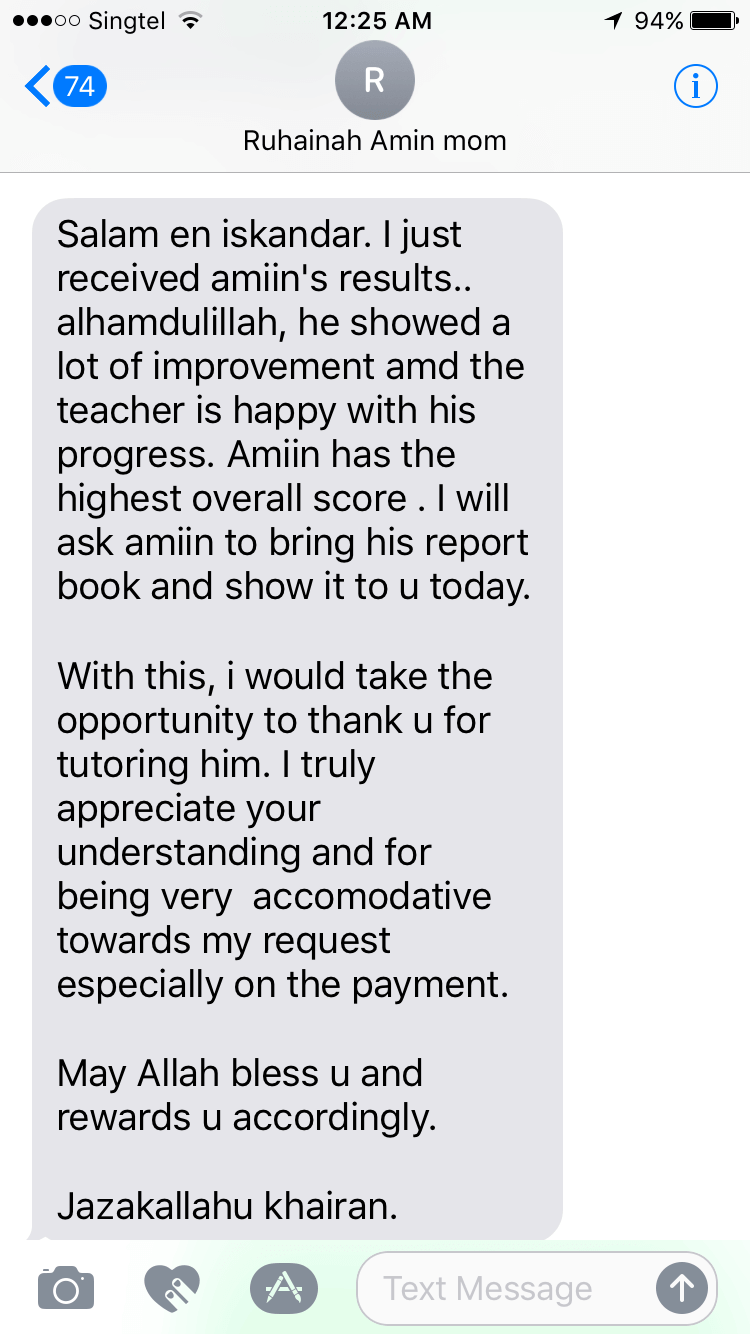
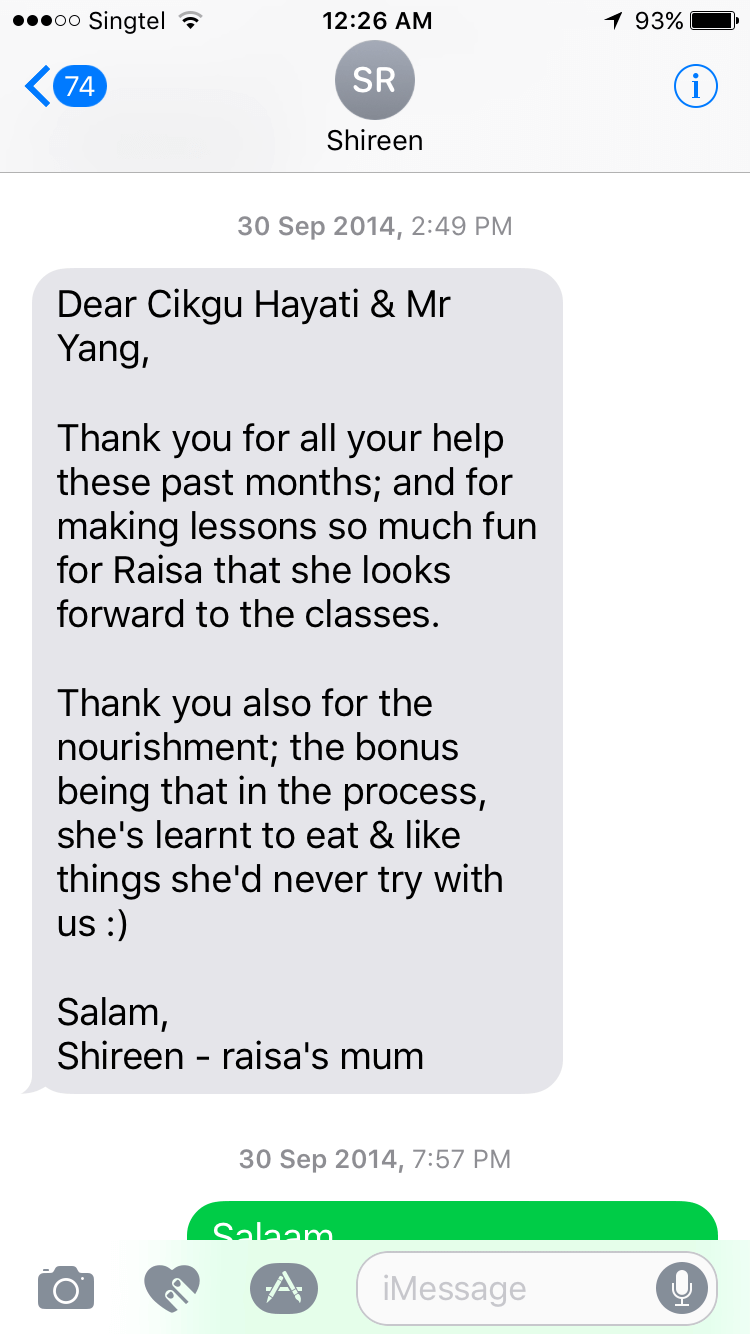
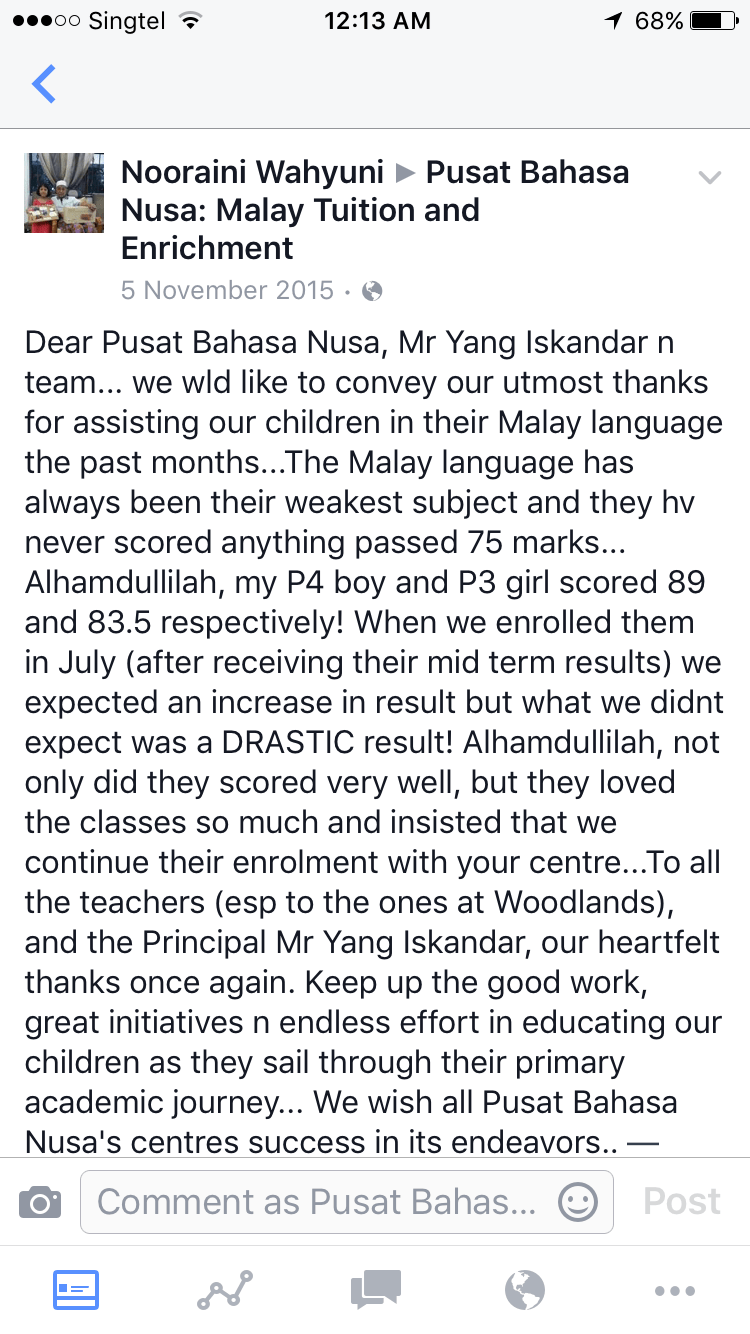
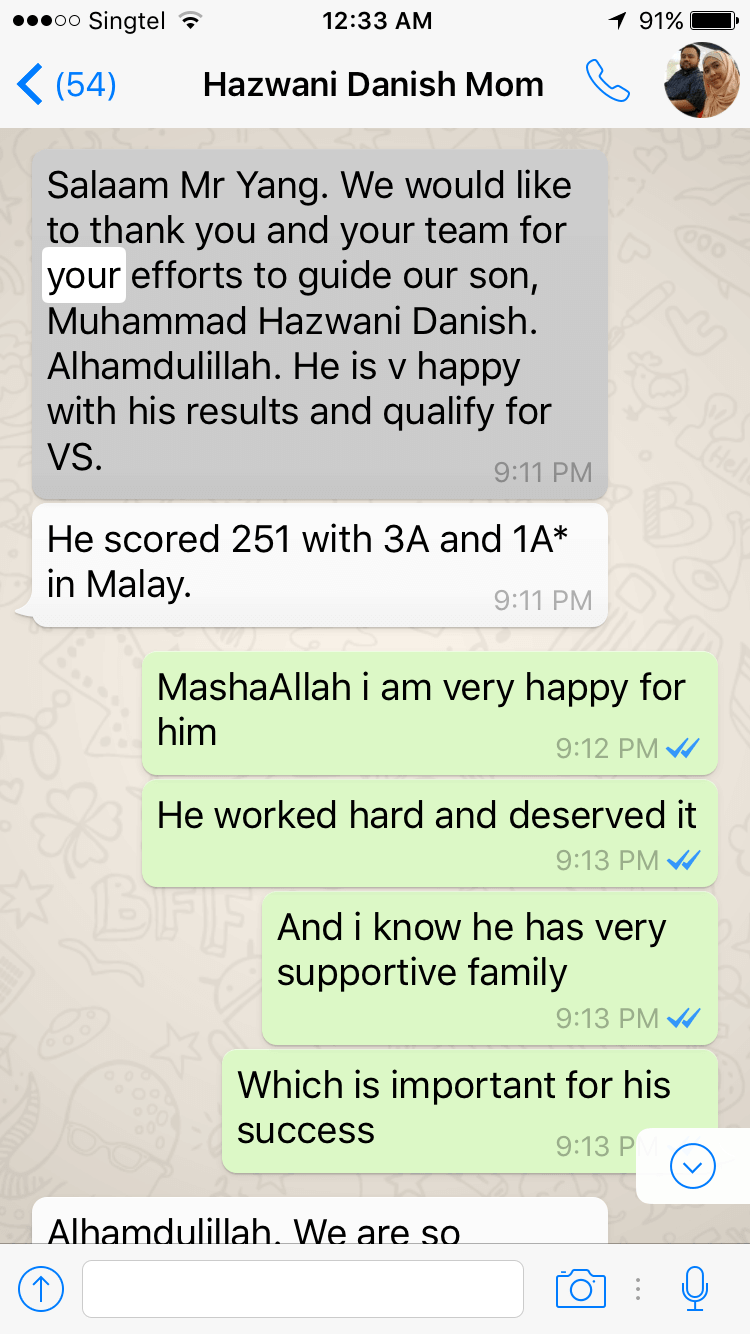
Our Students Excel Where It Matters Most — the PSLE
| Student Name | PSLE Score | Edufront Branch |
|---|---|---|
| Sarah Marissa Lim | 4 | Pasir Ris Blk 614 |
| Sayf Khaliq Sophian Hadi | 4 | Live-Online |
| Roshaan Bin Muhammad Suhadi | 5 | Pasir Ris Blk 483 |
| Mohamad Naufal Matin Bin Mohamad Hairudin | 5 | Choa Chu Kang |
| Imran Bin Muhammad Firdaus | 5 | Tampines |
| Abhayvir Singh | 5 | Jurong West |
| Ibraheem Ahmad Hafiz | 6 | Tampines |
| Nikita Kaarthikeyan | 6 | Pasir Ris Blk 483 |
| Adam Harith Bin Saifudin | 6 | Jurong West |
| Natasha Iman Bte Abdul Rahman | 7 | Live-Online |
| Akif Zafran Al-Mazni | 7 | Live-Online |
| Sarah Safiyyah Binte Muhd Rizal | 8 | Live-Online |
| Salim Al Fatih | 9 | Tampines |
| Saif Aqasha Ramadhan Bin Faizal | 9 | Pasir Ris Blk 483 |
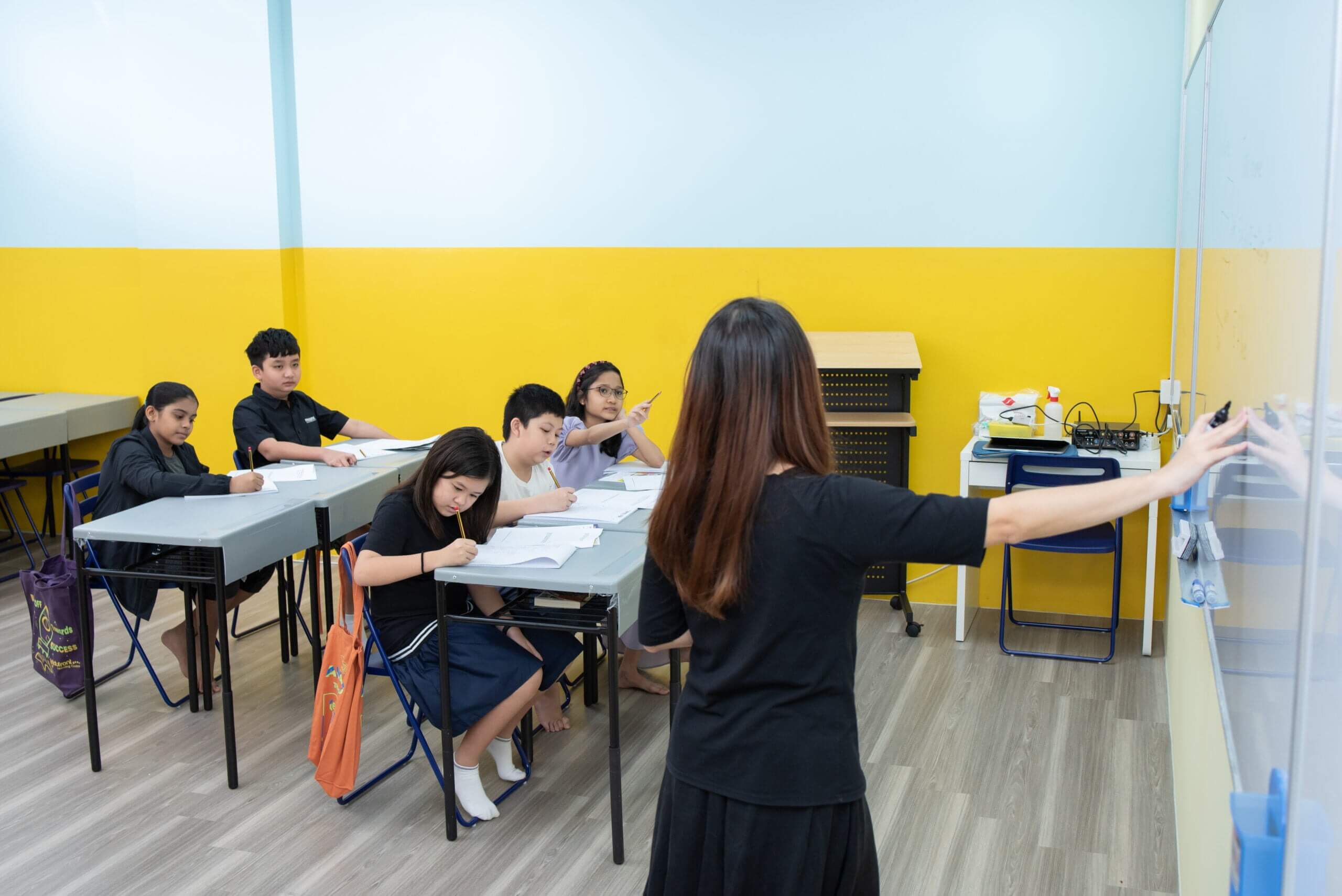
Learn In-Centre Across Singapore or Online from Home

Latest Articles
Valuable reads for parents and students alike
September 17, 2025
April 9, 2024
Common Questions
About our mastery programmes and classes
Our Primary Science Tuition (P3–P5) focuses on building conceptual understanding, developing process skills, and nurturing curiosity through hands-on experiments. Our PSLE Science programme shifts focus to exam-specific preparation — mastering the CER answering framework, tackling application questions, practising data interpretation, and building confidence through mock exams. The PSLE tuition is designed for P5–P6 students who need targeted exam readiness.
We teach the CER (Claim-Evidence-Reasoning) framework for open-ended questions, which ensures every answer is complete and well-structured. Students also learn to differentiate between "explain," "describe," "compare," and "predict" question types, and to construct answers that address each type appropriately.
Our students consistently improve by 1–3 Achievement Levels. Many students who join us at AL4–AL6 have gone on to achieve AL1–AL3 in the PSLE Science exam. Results depend on the student's commitment and starting point, but our structured programme maximises every child's potential.
Based on our analysis of past papers, the most frequently tested topics include photosynthesis and respiration, circulatory and digestive systems, electrical circuits, heat transfer, food chains and webs, adaptation, the water cycle, and forces. We allocate additional time and practice to these high-impact areas.
Yes, we conduct regular timed mock exams that simulate the actual PSLE Science paper format — both MCQ (Section A) and Open-Ended (Section B). Each mock is followed by a detailed review session where students analyse their answers and learn how to improve.
Our small class sizes allow tutors to identify individual gaps and provide targeted support. We conduct diagnostic assessments to understand each student's weak areas and allocate focused practice on those topics. The LMS also allows students to revise specific topics at their own pace.
We recommend beginning PSLE-focused Science preparation at the start of Primary 5, which gives students time to strengthen both their conceptual understanding and exam skills. Students joining in P6 can still benefit significantly, especially from our answering technique training.
Our PSLE Science programme fees is SGD 230 per month. This includes all teaching materials, mock papers, and LMS access.
Yes, we offer Live@Online PSLE Science classes with the same curriculum, qualified tutors, and interactive approach as our in-centre lessons. Students participate from home with full engagement and personalised feedback.
Yes, process skills (observing, comparing, analysing, inferring, predicting) are embedded throughout our PSLE programme, as they are directly tested in both MCQ and OE questions. We teach students how to apply these skills specifically in the context of exam questions.